


The ICO team look back on 2025 and share some personal highlights from the year in cinema. We’d love to hear your favourite moments – let us know on Instagram.
Jump to:
- James Corr – Best Animal Performances of 2025
- Heather Bradshaw – My favourite film of 2025
- Kat Haylett – Five films that made me cry, in order of theatrical release
- Patrick Stewart – My film of the year
- David Williams – 2025’s Best Scenes
- Ella Marsh – Favourite First Watches of 2025
- Duncan Carson – Favourite screenings of 2025
James Corr, Training and Professional Development Officer
Best Animal Performances of 2025

The President’s Cake – Hindi the Chicken
I adore this film for many reasons, and one of those is for introducing me to the first acting chicken I’ve ever seen. The President’s Cake immerses you in luscious Iraqi marshlands, providing an otherworldly feeling that is enhanced by Hindi, who accompanies Lamia on her quest to acquire cake ingredients. The oppressive climate in which the film is set could become overwhelming if it weren’t for the sweetness of the relationship between Lamia and Hindi. For the most part, I’ve only ever seen chickens evoke a small handful of emotions, but Hindi pushes avian boundaries with a layered and evocative performance that recalls some of the best animal roles in film history. If you’ve never seen a chicken look both inquisitive and sorrowful at the same time, please take this opportunity. You’ll also be doing yourself a favour by watching one of the best films of 2025.
Left Handed Girl – GooGoo the Meerkat
Originally, the role of GooGoo was meant for a monkey, but I believe it’s greatly beneficial to the film that Shih-Ching Tsou chose to cast a meerkat. The inquisitive face of the meerkat is the perfect match for sweet I-Jing. GooGoo can get away with all the things that I-Jing wishes to do, and I-Jing often lives vicariously through her mongoose companion. Timon will always be the most iconic meerkat performance, but I like to think he’d be proud to pass the torch to GooGoo.
Love That Remains – Panda the Dog
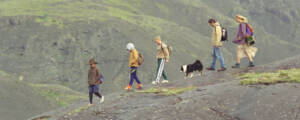
There are regular debates about the best canine performance of the year, and I rarely agree with the Palm Dog pick, but this time, they were right. Panda, the real-life furry friend of director Hlynur Pálmason, doesn’t do anything flashy in this performance. There are no circus tricks to grab attention, and it’s a much quieter performance than previous winners like Messi from Anatomy of a Fall. What Panda symbolises is the constant presence of dogs in the family unit. If anything, he’s the cornerstone holding everything together.
If I Had Legs I’d Kick You – The Hamster
Beatrice Straight is currently recognised for delivering the shortest performance to win an Academy Award (5 minutes and 2 seconds in Network), but I believe this diabolical furry ball of rage should give her a run for her money. There are several memorable scenes from If I Had Legs… but none more so than the couple of minutes during which this hamster terrorises the screen, capturing the energy of many an early Scream Queen and leaving a lasting impression that endures well beyond the credits roll.

Sorry, Baby – Olga the Cat
Having an adorable kitten in your film is always an easy win, but adorable little Olga manages to take the crown for the cutest cinematic cat of 2025 from Flow for me (I know that’s not a real cat, but they feel real). Olga embodies the serotonin boost that pets, especially cats, can offer even in the darkest times, as if they instinctively know when you need them. This has not been done as sweetly since Perrito in Puss in Boots: The Last Wish.
Honourable mentions:
Flow – The Cat
Die My Love – The Dog
Superman – Krypto the Superdog
The Ice Tower – The Crow
Bring Her Back – The Cat
Heather Bradshaw, Assistant Film Programmer
My favourite film of 2025
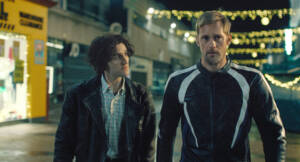
Pillion (dir. Harry Lighton)
Harry Lighton’s tender and subversive debut is by far my film of the year for 2025, with his genre-defying sub-dom-rom-com redefining the rules of romantic storytelling for a new generation. An adaptation of writer Adam Mars-Jones’ Box Hill, Pillion is the story of a shy and lonesome traffic warden named Colin (Harry Melling), who lives a quiet life with his parents in suburban Kent. When he isn’t singing with his dad in a barbershop quartet at the local pub, Colin is reluctantly going on dates set up by his overbearing mother; an existence of ingrained submission to the detriment of his charming yet mousey character. When the brooding and stupidly handsome biker Ray (Alexander Skarsgård) comes into his life, offering him a transactional arrangement of peculiar domesticity and obedience, Colin is opened up to a whole new world of sex, biking and BDSM, laden with emotional precision and familiar British wit.
Despite its niche context, at its very core, Lighton’s unconventional romantic comedy is a tale as old as time. There’s a dynamic to be found in every relationship, and effective communication is always the key to creating harmony, though it’s true the extremities of these dynamics may vary. You’d be hard pressed not to see Colin’s ‘aptitude for devotion’ reflected in any timely coming-of-age love story, or a more delicate portrayal of self-discovery than Harry Melling in Pillion, which is what I find so uniquely compelling. Each twinkle in Colin’s eye as Ray lays down the law is an indication that he has found his people; his calling, you might say, but the perimeters of that are what he must discover within himself.
What’s more, Pillion is an excellent education in sub-dom relationship dynamics, offering an authentic insight into the romantic undertones of an otherwise stigmatised sexual discipline, with a cast of real-life queer bikers (and a Scissor Sister!) to boot. With perceptive symbolism and a strain of Alan Bennett-esque humour, Pillion unfolds as a quietly radical character study that surprises as often as it moves; one which continued to stick with me on every new watch. Lighton has crafted a narrative that is at once emotionally resonant and unpredictable, following Colin’s journey of introspection with a lightness of touch that belies its thematic weight, of the subdued revelations that shape who we become.
Kat Haylett, Events and Communications Officer (FHSE)
Five films that made me cry, in order of theatrical release date
It’s not difficult for a film to get me lachrymose, I’m an easy mark (the hardest I’ve ever cried was during the in-memoriam montage at the end of Furious 7), but I don’t consider “emotionally manipulative” a substantive critique, as aren’t stories designed to manipulate your emotions? There are films in which I wonder if they really earned the response, but I think these moments have value and tell me something about myself and the filmmaker, even I hated 95% of the film. I won’t reveal the moment of tears for each, as it would probably spoil the film if you haven’t seen it, but these were the 2025 releases that tipped my tearducts over the waterline.
Nickel Boys (dir. RaMell Ross)
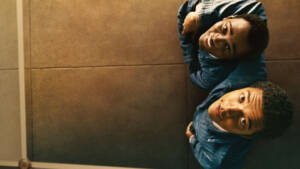
I went into this so blind that I didn’t even know about the POV-shooting technique, let alone the various structural twists. I loved it so much I went back the next week to see it again and cried like a baby both times.
Flow (dir. Gints Zilbalodis)
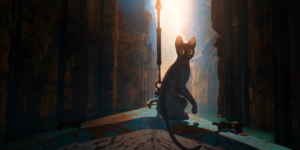
If you’re a cat lover, this film should come with an additional content warning! These guys are all my friends and whenever the cat was in peril I was on the verge of a breakdown!
Sinners (dir. Ryan Coogler)
The spectacle of the year, I went to see this twice in a week to relive that 70MM IMAX experience, which if you can get to it is probably the most goosebump-inducing time you can have for £25. Cried both viewings, always because of Wunmi.
One Battle After Another (dir. Paul Thomas Anderson)
Another format triumph, saw this twice in VistaVision! Again, cried on both cinema outings, on the strength of Chase Infiniti’s performance and some well-timed needle drops.
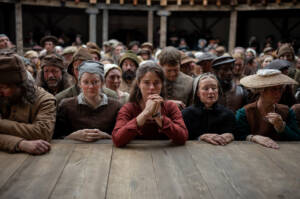
Hamnet (dir. Chloé Zhao)
Is the use of Max Richter’s On the Nature of Daylight a cheat code to escalate the emotional stakes of an otherwise lifeless and aggravating narrative? Was I also basically hyperventilating for the final 20 minutes of the film? Yes, and yes. Cinephiles contain multitudes.
The Bob Emergency (dir. Jon Bois)
Some shameless self-promo, but with my screening collective, Ecstatic Truths, I programmed The Bob Emergency by Jon Bois. This visually inventive video essay is a statistical analysis of people named “Bob” in professional sports. I cry every time I watch this; Bois’ use of storytelling, music, and cinematic reveals, all through the rudimentary filmmaking software of Google Earth, emotionally transforms what would otherwise be a series of Wikipedia footnotes.
Patrick Stewart, Marketing and Communications Manager
My film of the year

Fiume o Morte! (dir. Igor Bezinović)
I was lucky enough to catch, as last-minute shot in the dark, the excellent Fiume o Morte! at the Garden Cinema with a Q&A with director Igor Bezinović. This fascinating documentary about the 1919-1921 occupation of the then-majority-Italian-speaking port of Rijeka/Fiume in what is now Croatia by Italian proto-fascist warrior-poet-twit Gabrielle D’Annunzio. If that sounds like a bad idea to you, you’re right. It all ends in well-deserved failure. As Bezinović pointed out, it’s a rare example of a military occupation with the aim of being absorbed into a country, ending up with that country declaring war on you (and winning).
Using a cast of current residents of Rijeka to reenact key moments of the occupation, Bezinović allows pathways for the present day to seep into his well-told historical account. Though as a form of documentary storytelling it reminds one of The Act of Killing, though the stakes are much lower here than watching those perpetrators of massacres proudly reenact their own crimes – while blood was shed in Rijeka it never turned into a true bloodbath and it was all over 100 years ago.
Though on the surface the reenactments give a bit of levity to proceedings (helped by the fact that the question of Rijeka’s sovereignty is no longer live), the dialogue that they create between past and present gently nudge you to consider what this poorly conceived military adventure might say about our nations and nationalism today. Bezinović keeps the gaze tightly on the D’Annunzio story (and the stories his volunteers told and sang to themselves), but shuffling around in the shadows is the suffering of the Croation-speaking minority at the time, the emergent figure of Mussolini who’d become prime minister shortly after the fall of D’Annunzio’s Fiume and the present-day spasms of ultra-nationalism in Italy, Croatia and elsewhere.
The questions this brilliant film posed will linger long in my mind into 2026.
David Williams, Film Hub South East Officer
2025’s Best Scenes
Friendship (dir. Andrew DeYoung) – the sandwich trip
Friendship sees Tim Robinson, star of sketch comedy show I Think You Should Leave, play Craig Waterman, a man who desperately wants to befriend his cool meteorologist neighbour Austin Carmichael, played by Paul Rudd. A series of misadventures leads to Craig damaging his phone, visiting a repair shop, and being casually offered something “stronger than beer” by an employee. Predictably, that offer is taken up, and Craig soon finds himself licking a toad in the back of the store and having a lie down.
We know what to expect here. We’ve all seen the psychedelic shenanigans and gratuitous gurning native to drug trips on the silver screen. Someone’s face turns into an animated ice cream cone, someone crawls to a Lamborghini and opens the door with their foot. Outlandish physical comedy and random, unhinged visuals are de rigueur. Who better to deliver on this promise than Tim Robinson, whose comic stylings are stratospherically over the top? Which is why this scene in among the best of the year. It defies expectation. It takes you to a place beyond imagination. That place is Subway. It has to be seen to be believed.

No Other Choice (dir. Park Chan-wook) – the shouting match
Cho Yong-pil is a titan of Korean pop music, whose 1981 song ‘Red Dragonfly’ has proved to be an enduring hit, but a number of audiences will be first exposed to it through its usage in Park Chan-wook’s No Other Choice. Here, the earworm memorably blares for the duration of an incredible sequence.
Played with fierce determination by screen legend Lee Byung-hun, Man-su is a man on a mission: to eliminate rivals for the paper industry job he’s desperately seeking. One such rival is Beom-mo. Man-su enters Beom-mo’s home and holds him at gunpoint while he listens to ‘Red Dragonfly’, but before making an attempt on Beom-mo’s life, Man-su gets into an argument with him, and the pair scream at the top of their voices to be heard over the song. The situation grows more absurd, as Man-su berates Beom-mo for failing to listen to his wife, making his wife hesitate to rescue him from the would-be assassin. Things continue to spiral from there, and the scene easily cements itself as among the best of the year.
One Battle After Another (dir. Paul Thomas Anderson) – the car chase
A sprawling political thriller packed with towering performances, Paul Thomas Anderson’s modern American epic has more highlights than 90s Jennifer Aniston, but chief among them is its one-of-a-kind car chase. Grand, patient, and foreboding, the climactic sequence unfurls across a hilly Californian road, as young mixed-race fugitive Willa Ferguson (portrayed by aptly-named breakout star Chase Infiniti) is pursued by a white supremacist sent to kill her. Willa’s father, Bob Ferguson (a burnt-out Leonardo DiCaprio), is trailing closely behind as he tries desperately to reunite with his daughter. Their cars are red, white, and blue, because PTA is not a subtext coward. Both anxiety-inducing and mesmeric, the chase is an instant classic even before ending in explosive fashion and culminating in an emotional final moment scored by composer Johnny Greenwood’s incredible ‘Trust Device’ cue. A genuinely unforgettable moment at the cinema.
Sinners (dir. Ryan Coogler) – the past, present and future
The marketing for Ryan Coogler’s 1930s-set Sinners focussed heavily on the dual role for its star Michael B Jordan and the looming supernatural threat of its story, keeping the musical aspect of the film almost entirely hidden. Needless to say, it came as something of a surprise just how integral music was to the film, and it was even more of a surprise that the undeniable highlight of this historical horror was not a blood-sucking scare or an outrageous action scene, but a musical sequence – one that folds time in on itself. It’s a big swing. As Miles Caton’s Sammie Moore performs at a newly-opened juke joint, we witness spirits of the past join revellers on the dancefloor, lured by his gift. Then, alongside those ghosts, the dancefloor is suddenly host to a funk guitarist reminiscent of Bootsy Collins, soon joined by a number of others from more contemporary music scenes. The introduction of The Ghosts of Music Future is jarring at first, but it’s such a well-conceived and masterfully constructed set piece that it completely wins you over in the moment, as it celebrates a spiritual connection between black musicians of all eras.
Superman (dir. James Gunn) – Lois interviews “Superman”
After more than a decade of audiences having to endure the worst conceivable version of Superman ever to curse the screen, James Gunn and David Corenswet righted all those wrongs, bringing the Man of Steel to life in a buoyant, zany adventure that stays true to the heart of the character, places him squarely in the modern era, and demonstrates why he’s so enduring. While there’s a whole lot the film does that hasn’t been done in the movies before (like Krypto the super dog), it is indebted to the 1976 Richard Donner adaptation in a number of ways, and has its own take on that film’s famous Superman and Lois Lane interview scene. Here, Lois and Clark (already dating) speak on the record, with Clark assuming the role of Superman out of costume. It’s a great touch, that gets to really explore the relationship dynamic, and what makes the characters tick. In the space of ten minutes, Clark is besotted, a little overconfident, irritated, angered, and hurt. The scene allows him to be humanised in a way that’s crucial to the film’s approach to the character, emphasising that Superman is a role Clark plays, not the other way around (no matter what Kill Bill has to say about it).
Wake Up Dead Man (dir. Rian Johnson) – the phone call
Sadly, due to ongoing malpractice from the enemy to exhibition that is Netflix, few will have experienced the hush that sweeps over audiences in the standout moment from Wake Up Dead Man, the third Benoit Blanc whodunnit from director Rian Johnson. With Daniel Craig’s Blanc positioning himself as having an opposition to religion in his introductory scene, the stage is set for the film to do the same. In large part, it does, as faith, institution and cult of personality are targeted by the film’s critique. However, there’s a perfect tonal shift when during a phone call with overly talkative office worker Louise (played by Bridget Everett), Josh O’Connor’s Father Jud grows increasingly frustrated by not being able to further the investigation or get Louise off the phone. Up to a point, the exchange provides comic relief, but then Louise asks Father Jud to pray for her dying mother. It’s a moment of dignity afforded to believers that the film did not appear to have space for, and a beautiful tender moment from a character perspective that demonstrates an incredible command of atmosphere on the part of the filmmakers.
Ella Marsh, Assistant Film Programmer
Favourite First Watches of 2025
Handsworth Songs (1986) (dir. John Akomfrah)
I was completely blown away by the impact of Handsworth Songs – an experimental film essay on race and disorder across Birmingham and London during the 1985 riots. Whilst documenting several acts of rebellion, it’s rebellious in nature. It lays bare that art is inherently political. A documentary made nearly 40 years ago, the themes of race, class and identity, are still prevalent today. What particularly resonated with me was what it taught me about how our attitudes towards riots should be framed – the need to look at the context from which these riots emerge. Rather than falling into a tendency that occurs all too frequently within UK society – namely, an excoriating view of the individual…
“There are no stories in the riots, only the ghosts of other stories”

Black Narcissus (1947) (dir. Michael Powell and Emeric Pressburger)
I’m ashamed to say how long it’s taken me to watch this Powell and Pressburger certified banger. They have an innate ability to confront power and the colonial forces of the British imperial rule in 1947 within a melodramatic and romanticised context. Definitely a product of its time, it’s more devastating than you would expect. It has everything one can need in a film: stunning visuals, a high degree of yearning, crises of faith, and a mad nun.
Ghost Dog: The Way of the Samurai (1999)(dir. Jim Jarmusch)
This year, Park Circus restored Jim Jarmusch’s neo-noir, meditative piece in 4k. So, I had the pleasure of being able to self-soothe to it on a hot summer Sunday evening on the big screen. RZA (who can sure as hell rival Hans Zimmer) provides a score that stands as one of the best hip-hop soundtracks of the ‘90s.
The code of the samurai is one of honour, loyalty and moral integrity. Jarmusch illustrates how these teachings can be applied to ordinary life through a humanist approach to the gangster genre. It’s a vital snapshot of several seemingly different ways of life attempting to understand each other through literature and communication. It’s for the melancholic folk who like beautiful tunes, an almighty final-act climax, and who believe carrier pigeons are the technology of the future.
Duncan Carson, Projects and Business Manager
Favourite Screenings of 2025
The screenings I most enjoyed this year threw into relief the contribution the screening experience offered above and beyond the film itself. While all of the films below are excellent – except The Keep, which is baffling – it would be a different list entirely to say my favourite films of 2025 or even my favourite discoveries. So thank you to all of the people who put these events together. I know more than ever how much care and love go into this!
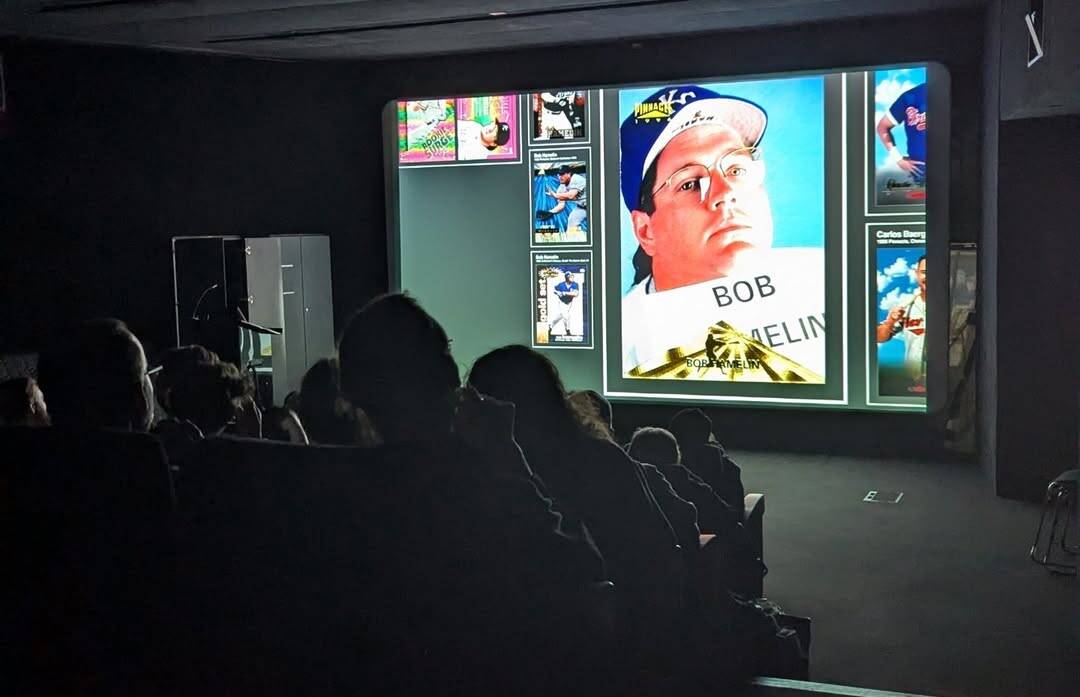
The Bob Emergency (dir John. Bois)
I am known – much to everyone’s eye rolls – as a noted sport hater, so it took the flawless imprimatur of the Ecstatics Truths film club for me to consider watching a 90 minute documentary about the decline of men called Bob in professional sports. Moreover, it’s one that was conceived as a Youtube video essay. One of the core tenets of good curation to me is offering people something they wouldn’t consider otherwise something they end up loving by handing it to them in a package they’ll consider. This is thrilling, ambitious filmmaking and I’m so glad my ICO colleague Kat (and her partner in Ecstatic Truths Charlotte) offered it to me.
The Keep (dir. Michael Mann), Bar Trash
Richard from Token Homo is the quintessential showman, and a lesson to us all in the indie world on how to create a vibe, making screenings inclusive, thoughtful, detail-rich, witty and warm. I generally don’t ride the ‘trash or treasure’ line in film, but the Bar Trash experience makes sofas in Genesis’s bar seem like one of the essential places to be.
The Working Girls (dir. Stephanie Rothman), Cinema Rediscovered @ Watershed, Bristol
Speaking of treasure from trash, this was a welcome discovery for me thanks to Selina Robertson and Isabel Moir (more ex-ICO colleagues!) and their tour of the films of Stephanie Rothman. The film itself is joyous, surprising and trivial in the best way. But it also had one of my favourite things: bonding by way of technical problems. Stephanie could not be reached by Zoom post-call, so Selina was forced to conduct the Q&A by mic held up to phone on speaker. And yet her vibe was as deep as Selina’s phone bill.
One Battle After Another (dir. Paul Thomas Anderson)
Speaking of technical issues… For Paul Thomas Anderson’s latest, I went big, opting for opening weekend VistaVision at the Odeon Leicester Square. After the seemingly endless ad reel, we were treated to a front of house member explaining why the print was so special. However, as he retreated to the wings, the curtains opened for our induction into glorious celluloid… only for one curtain to remain stubbornly closed, accompanied by ominous mechanical gear grinding. The mounting screams as the BBFC card, the Warners logo and then the first frames of the film played out half projected onto curtain were a true joy, the connection possible between strangers. When the member of staff emerged to sheepishly explain they’d been standing on the curtain in the wings, hence the (ultimately resolvable) issues, it was a highlight of the show, even amidst the high watermark of Anderson’s American epic.
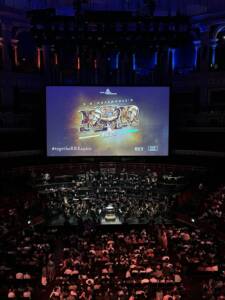
RRR (dir. S. S. Rajamouli) @ Royal Albert Hall
In trying moments this year, our house has turned to Bollywood (and Tollywood) for three hour+ comfort. So when a friend unexpectedly offered me and my wife a chance to see SS Rajamouli’s epic on the big screen with live orchestra at the Royal Albert Hall in a Royal Box with surprisingly excellent catering, I wasn’t about to say no. But little did I realise this would pale in comparison to the arrival of the film’s stars arriving after a relatively restrained Q&A with director and composer. When Ram Charan and NT Rama Rao made their entrance, I suddenly understood the force of fandom that would have made the Beatles stop performing live. My mind was even more blown when I realised after the first thirty minutes the gents in question were entering the adjacent box. Word got around that the stars were on our floor and there were autograph hunters stalking the corridors during the interval. It’s entirely understandable when you can bring this level of facial hair AND braces snapping.
The Man in My Basement (dir. Nadia Latif)
Excusing the shameless logrolling, this year my wife completed her debut feature and I was lucky enough to be riding sidecar for her Toronto premiere. Working in cinema, it can be hard to hold the incredible journeys filmmakers go on against the ephemerality of so much film. So seeing the culmination of that journey, to see something held so close handed over to audiences it was always intended for was a real joy. Film is five-star classic too, I have no bias.
Thanks for reading and joining us for a great year of film – we hope you continue to have a happy and restful festive season, and we’ll be back with lots more in 2026!