

Tony Rayns Remembered (1948 – 2026)

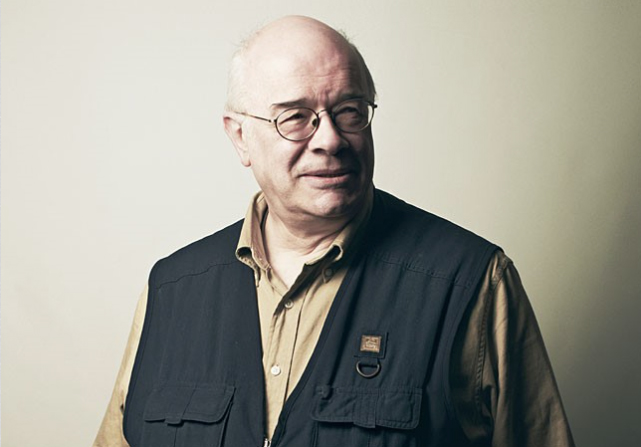
We are so very sorry that the ICO’s good friend and cultural collaborator of many years, Antony ‘Tony’ Rayns passed away earlier this month. In this piece, Simon Ward, former Deputy Director and later a Trustee of the ICO, pays tribute to Tony’s tireless work to promote independent cinema around the world.
From the ICO’s beginning, Tony supported our organisation’s mission to increase the diversity of films and cinemas in the UK. As well as his ongoing informal advice, he worked with us closely on two major retrospective touring programmes.
In 2005, Tony proved invaluable with his typically enthusiastic and generous help mounting our project to programme and tour the first UK screenings of now legendary Japanese filmmaker Masumura Yasuzō. The Cruel Beauty of Masumura Yasuzō comprised eight titles, which, outside a couple of London Film Festival screenings (programmed by Tony of course!), were previously unseen in UK cinemas. Tony helped us source and clear the 35mm prints, and together we launched at BFI Southbank before touring the UK.
In 2012, Tony again collaborated with the ICO to bring the work of Hong Sang-soo to the UK. Back then, Hong’s films were largely unknown in the UK, but Tony had brought his very first feature to the London Film Festival in 1996. We enlisted Tony to help us bring Hong, together with a full retrospective of his films (a mere 10 features back then!) and shorts, to the UK. As with Masumura, Hong Sang-soo Between Men and Women launched at BFI Southbank before touring across seventeen UK cities and towns. Tony was invaluable in introducing us to the myriad international sales agents and rights holders to smooth the way and it’s hard to imagine it happening without him.
Tony’s career is well documented, from his setting up student film societies in his Cambridge days to his championing of the American Avant-Garde (and particularly his friendship with Kenneth Anger, and his taking Andy Warhol out on the town on the artist’s first trip to London). He wrote for the UK’s Sight and Sound for over fifty years, and contributed regularly to France’s Cahiers du Cinéma, the USA’s Film Comment and South Korea’s Cine21. He also edited the first book in English on Rainer Werner Fassbinder. Tony’s professional curatorial journey began with his bringing early tasters of Chinese cinema to the BFI’s then National Film Theatre (now BFI Southbank). A significant conduit for putting his discoveries into UK cinemas was forged through his long-standing relationship with London’s ICA (where he worked with, among others, the late much-lamented Simon Field as well as David Sin, Edward Fletcher and myself).
Tony programmed film festivals including: Edinburgh, London, Rotterdam, Pingyao and Vancouver. The latter festival saw him establish the preeminent international showcase for East Asian cinema through his Dragons and Tigers strand which ran from 1994 to 2013, a model since copied the world over. When Tony was invited to put this together for Vancouver, he insisted the prizes carry not just a trophy but a meaningful cash award, to help these often cash-strapped and marginalised filmmakers make their next work.
Along with his critical and curatorial work, Tony also made many documentaries including, for Channel Four’s Visions series, films on Hong Kong, Chinese and Philippine cinema. He was a key consultant in the BFI’s Century of Cinema commissions from the likes of Ōshima Nagisa, Stanley Kwan and Jang Sun-woo (the Korean filmmaker about whom Tony would later make the excellent Jang Sun-woo Variations). He also wrote Away with Words, directed by Wong Kar-wai’s one-time regular cinematographer Christopher Doyle, although he was unhappy with the finished film.
The list of big-name filmmakers first spotted and supported by Tony is endless: Wong Kar-wai, Kitano Takeshi, Hou Hsiao-hsien, Kore-eda Hirokazu, Chen Kaige and notably his long friendships with Edward Yang and Jia Zhangke. The supportive professionalism Tony so often extended to others is typified in his long-time relationship with Apichatpong Weerasethakul. They first encountered each other when ‘Joe’, as Tony affectionately called him, was an unknown filmmaker in a festival audience. Joe placed a VHS rough-cut of his first feature in Tony’s hands. Despite his busy social and professional schedule, Tony dutifully watched Joe’s film back in his hotel room that same evening, calling him the following day with congratulations and offering a future festival berth which would open Apichatpong’s career to the world, something the now Palme d’Or-garlanded filmmaker never forgot.
In later years Tony was a great supporter of, and through his much-admired commentary tracks, contributor to the burgeoning Blu-ray boutique labels springing up around the world from Imprint to Criterion, from Radiance to Disk Kino and more. His professionalism and erudition were in a class of their own. As on camera, in life, Tony could be asked about a relatively obscure (he would bridle at this!) film or filmmaker and out would pour a fluent treasure trove of anecdotes and keen analysis with seemingly no prep needed.
On a personal note, I’ve been lucky enough to know Tony as a close friend and mentor over the last thirty-plus years and can testify first-hand to his immense, often humbling, knowledge of cinema across all continents. For me, his critical writing remains unequalled, marrying deep historical and social understanding to real wit and elegant prose. Through that prism he explored and championed so many of the films which have subsequently come to be regarded as canonical.
Perhaps Tony’s defining professional characteristic was his exceptional curiosity and thirst for discovering, nurturing and promoting new film talent. But outside of his public life, he embraced all culture including music, art and literature with equal vigour and rigour. Tony and I went to many films, galleries, music, book and DVD shops together, these outings always married to a long boisterous meal in London’s Chinatown where he invariably knew whoever owned the restaurant and proceeded to order off-menu for us both. He was always keen to know more, see more and feel more. An inspirational figure for me and many who came into contact with him.
Tony was an obsessively keen archivist of all cinema, from classical Hollywood to the most avant-garde and esoteric. He would meticulously label and store away thousands of discs in his patented shoe-box home storage system and was generous in lending me some incredibly rare films across the years. As I sit writing this, my eye rests on a German disc set of Claude Chabrol’s 1980 TV remake of Louis Feuillade’s Fantômas serial. I never imagined I would not be able to return it to him on our next scheduled meeting after his recent visit to Bologna’s Il Cinema Ritrovato festival. He took many trips to my home by the sea, arriving with his ubiquitous festival-branded bag full of new and old rarities to show me (each complete with his trademark hand-penned programme note covering relevant historical insights and/or amusing trivia).
Tony would regale me for hours with brilliant anecdote upon anecdote drawn from his adventures to every corner of the globe, including many a scabrous encounter which would leave us both guffawing, and all punctuated with his expressing astonishment that I hadn’t heard of some long-dead actress from the Chinese silent era or a lost Thai film from the 70s underground. Then he would repair to my garden for a smoke as he continued to wryly educate me, or simply chat with my wife and teenage daughters while our family cat perched on his knee.
A warm sociable man with friends in every corner of the globe, Tony is irreplaceable. He will be greatly missed by the vast professional film network who hold him in the highest regard, and by those of us lucky enough to call him a friend.
In 2021 and 2022, Tony Rayns took part in three conversations about his career with Simon Ward for the ICO’s The Cinema of Ideas platform. They are available to watch here.